This week started with lots of prep for a Mastery Series I am teaching to a lovely group of ladies, referred to me by a friend of many years, and a fellow Bernina Lover, Sharyn Hall, a talented mixed media artist here in Brisbane. Thanks Sharyn! These ladies have all recently purchased new Bernina B570 machines and were wanting private lessons to learn more about the basics and extra fun stuff their machines can do. Their first class was yesterday, and they discovered a ‘treasure chest’ of new knowledge. I was so busy I forgot to take photos – maybe next week I’ll remember.
I do take a lot along to class, so here’s just what I packed into the back of my car yesterday morning. Not in the photo are the television screen and stand I take!
I’ve taught the Bernina Mastery Classes since 2004, when I was living in Townsville, so that makes it over 20 years of delivering them in stores and whilst freelance teaching! Each of the ladies work along with their own machines creating samples, and I teach via a Bernina Simulator. Have you downloaded one for your Bernina Machine? They are available on the Bernina website, and yes, even for the L860 and L890 Overlockers.
You can ‘play with it’ and learn about the different stitches and settings as if working on your own machine. A dialogue box opens also to explain what some functions are. You can even name and save new stitches in the simulator with lots of info to remind you just what settings, threads were used to create the perfect finish. Here’s a quick screenshot of mine in action.
... Did You Know? ...
2-Thread Overlocking Stitches
Each first Friday of the month, I will be looking at a category of stitches made on an Overlocker, Coverstitch or Combination machine.
The 2-Thread Overlock stitch is formed with an overlock needle thread (LN wide or RN narrow) and the lower looper thread. (LN refers to Left Needle and RN refers to Right Needle) The lower looper thread is guided to the right side of the fabric by means of the hooked-in upper looper converter. This sort of ‘tricks’ the machine into thinking there is thread in the upper looper.
You may find that you have an attachment to put onto your older machine to convert the looper for use with 2-thread stitches. Some years ago I owned a Bernina 800DL and here’s what that accessory looked like (diagram from Instructional Manual)
A similar looper convertor is provided with my BerninaL460, stored inside the front cover (photo below) – and here is a little video showing how it is attached.
My Bernina L890 Combo machine has the convertor attached to the machine, and has two positions – when moved to the left of the looper (in the video below) it is engaged, and then a simple flick over to the right disengages it.
A 2-Thread overlock stitch is ideal for lightweight and delicate fabrics, as it creates a neat, refined edge finish without adding extra bulk. It is mainly used to finish raw edges—particularly on seams that don’t require much strength—sew narrow or rolled hems on sheer materials, and with the addition of specialty threads, create decorative effects such as flatlock stitches or blanket-stitched edges.
The Wrapped Overlock Stitch—available in both wide and narrow versions—is a reversible stitch that works well for finishing single layers of fabric, seams, hems, and facings, or for adding a decorative touch to woven fabrics and stable knits. The wide version (Stitch # 9) is best suited for medium- to heavyweight fabrics and thicker threads, while the narrow version (Stitch # 10) is ideal for lightweight to medium-weight fabrics and finer threads.
The 2-Thread Flatlock Stitch is a very stretchy, flat seam that is frequently sewn with decorative threads or woolly polyester/nylon thread for garments such as lingerie, swimwear, and gymnastics wear. The wide version (Stitch # 11) works well on medium- to heavyweight woven and knit fabrics, as well as for patchwork, clothing, and craft projects. The narrow version (Stitch # 12) is better suited to lightweight to medium-weight fabrics.
The 2-Thread Rolled Hem (Stitch # 13) creates a delicate, refined edge finish on hems, ruffles, and flounces, making it especially suitable for bridal wear and lingerie. When used with Differential Feed (which I’ll explain in another post) to stretch the fabric slightly, it can also produce a decorative “lettuce edge” finish on knit fabrics.
The 2-Thread Overlock is perfect for finishing fine, single layers of fabric while preventing seam puckering. The wide version (Stitch # 14) can also be used to neaten heavier yet loosely woven fabrics with woolly polyester, nylon, or universal thread, making it suitable for both garments and home décor projects. The narrow version (Stitch # 15) is best for delicate silks, batiste, and lightweight knits, using fine woolly polyester, nylon, or other fine threads for a smooth, refined finish.
The 2-Thread Blanket Stitch is commonly used on ready-made blankets or heavier fabrics, featuring a longer stitch length and wider cutting width. Decorative threads can be used in both the needle and looper for added visual interest. The wide version (Stitch # 28) is ideal for medium- to heavyweight fabrics and knits, including pile and furry materials, and works well for decorative finishes on garments such as coats and jackets, as well as home décor items. The narrow version (Stitch # 29) is better suited to medium-weight and softer fabrics.
These are all the same photos I posted last week, as I stitched out all of these, when the C11 Foot was featured. A side note also regarding stitch numbers on the machines. All the same numbers are used for the same named stitches across all models of Bernina and Bernette Overlockers and Coverstitch/Combo machines. A chart of all stitches is available either in the Quick Start Guide or the Instruction Manual for each machine.
In Summary, the benefits of 2-thread stitches are a finer finish and less thread used.
... Riding the Hump ...
#C12 Coverstitch Compensating Foot
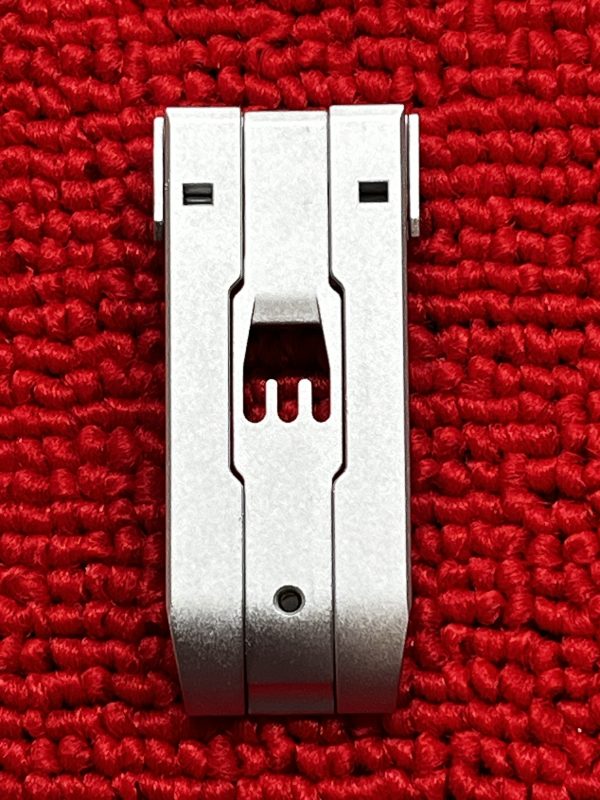
This optional accessory foot is used for coverstitch and chain stitches only, and is specially designed with a height-flexible sole which allows the foot to compensate for different fabric thicknesses.
It has 3 sections, a stationery centre, and then left and right springloaded ‘toes’ that move up and down depending on the thickness of the fabric underneath. This ensures that the foot always has full contact with the fabric under the presser foot and the feed dogs of the machine, which is essential for even feeding.
As with all the overlocking feet, there are markings to indicate the needle positions – left, centre and right – and the inner edge of each ‘toe’ can be used as a guide for fabric/seam placement. (Photos are from the instruction leaflet for the foot – link at end of the post)
Additional Notes for Other Models
Foot #C12 is specifically designed for the Bernina L890.
There is no Compensating Foot available for the Bernette models which feature Coverstitching.
... This Week’s Foot Highlights or Challenges ...
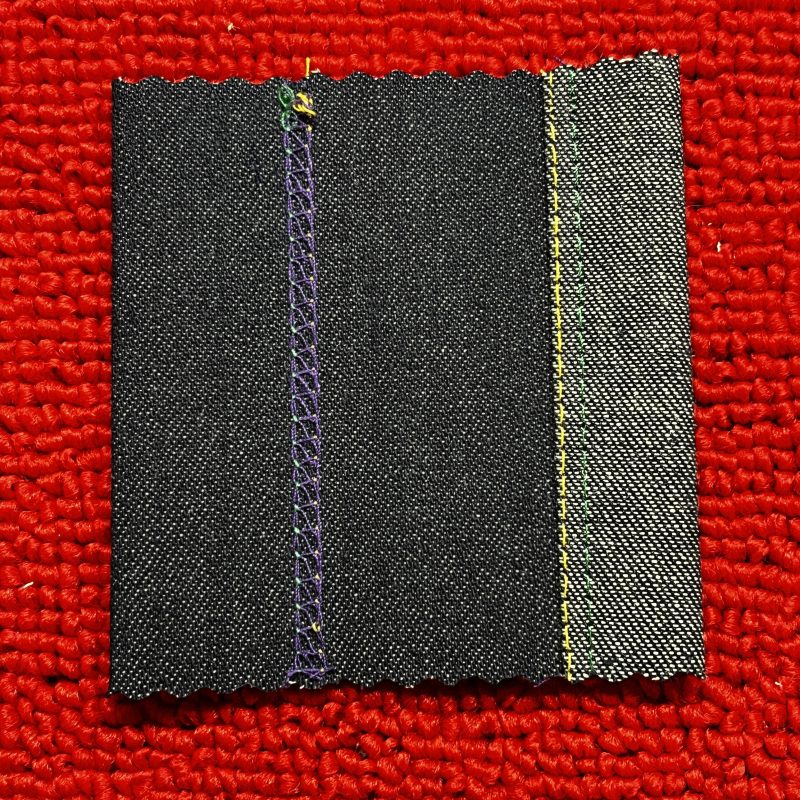
I find this foot great for topstitching seams, and in this sample I overlocked the seam, before topstitching with 3-Thread Wide Coverstitch #22 – Left Cover and Right Cover needles.
The next sample was adding elastic to an edge, 3-Thread Narrow Coverstitch #23 – Left Cover and Centre Cover needles. You could trim back the excess fabric if you wished.
Decorative topstitching on a hem can be a nice finish if you sew from the wrong side first, and then stitch again on the right side. I‘ve always liked using the wrong side/lighter side of denim as a feature as well.
When adding binding to an edge e.g. neck, contrast sleeve or hem edge, the first part of the technique would be seaming trim to edge, right sides together, using chain stitch, coverstitch or overlocking. (Centre photo shows the steps) Turn the trim to the wrong side, and topstitch from the right side, trimming the excess from the back if you wish.
This foot also works well when coverstitching down heavy tapes.
This foot does just what it name suggests, compensating for the different layers of fabric.
... A Little Something Extra ...
Foot User Manuals
On the Bernina Website, you can download a User Manual for Foot #C12.
Another great resource for education on current Bernina sewing machines and accessories, is the Bernina International YouTube Channel. The presenters deliver great content in a short video. Totally worth a look at!
Here’s the link to the video on this week’s foot, #C12.
Experience BERNINA Australia’s unique event and learn from talented International and Australian tutors. This is a sewing event you won’t want to miss held in Sydney, 12 – 15 August, 2026 at the Wenty Leagues Club, Wentworthville NSW.
Classes on offer are now up on the Website and tickets go live on 24th March! Exciting classes – truly an All Stars 2026 Bernina Academy!